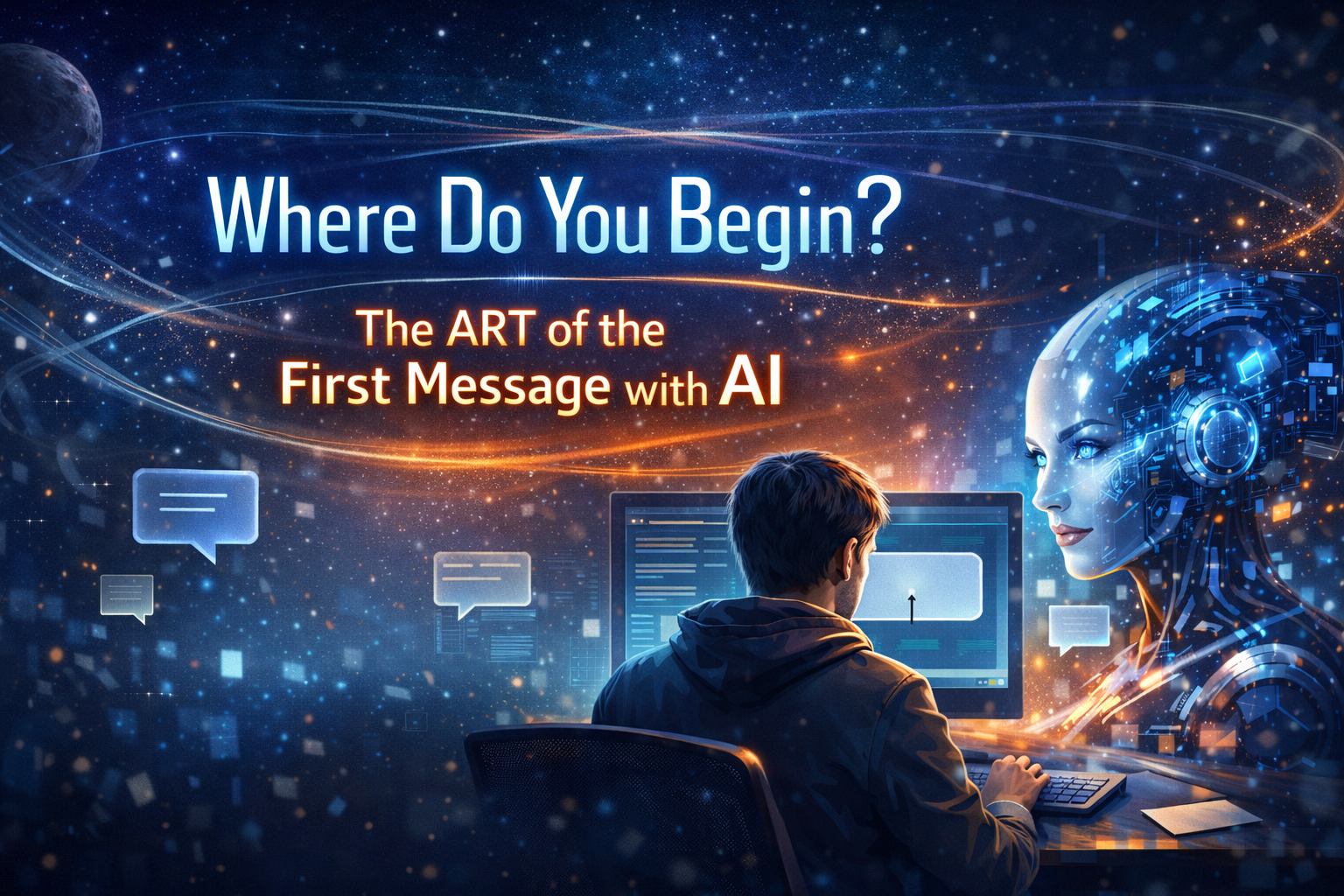

In the seamless world of modern AI, we often focus on the flow of conversation—the witty banter, the deep discussion, the collaborative story. Yet, every one of these intricate exchanges has a single, crucial origin point: the first message. That blank chat box, blinking beside a new character’s name, represents a moment of pure potential and, surprisingly, a common point of creative friction. How do you start a conversation with an entity that has no real-world experiences but a universe of possible responses? Mastering this opening move is less about technical skill and more about understanding the psychology of collaborative storytelling with a machine.
The Blank Canvas and the Burden of Initiative
Unlike messaging a person, there’s no social script for beginning a chat with an AI character. The interface offers no hints, no suggested openers—just a cursor in an empty field. This absolute freedom can be paralyzing, a phenomenon akin to the “blank page” anxiety faced by writers. The pressure isn’t to be socially correct, but to be creatively engaging enough to spark a compelling response from the AI. This moment shifts the user from a passive consumer to an active director. You are not just asking a question; you are setting a scene, establishing a tone, and providing the initial data from which the AI will build an entire world. The first message is the foundation upon which everything else is constructed, and a weak foundation often leads to a generic, uninteresting exchange.
Moving Beyond “Hello”: The Power of Contextual Anchoring
The most common pitfall is the overly generic opener. Messages like “Hello,” “How are you?” or “Tell me about yourself” typically yield bland, encyclopedia-style responses because they give the AI no creative direction. The secret to a vibrant, dynamic chat lies in immediate contextual anchoring. This means embedding your first message within a specific scenario that implies a history, a setting, or an immediate action. Instead of “Hello,” consider: “Okay, I found the secret map. The ‘X’ is marked right here in your library. What are we looking for?” This single sentence accomplishes multiple goals: it acknowledges the character’s defined role (a librarian, a scholar, an adventurer), establishes a shared activity (treasure hunting), and asks an open-ended question that requires an in-character, creative answer. You are not starting a conversation from zero; you are jumping into the middle of an existing story.
Strategies for Sparking Dynamic Dialogues
Overcoming the initial hesitation requires a shift in mindset. You are not initiating a Q&A session but providing a narrative prompt. Several effective strategies can bridge this gap. One powerful approach is to start in media res—begin in the middle of action or drama. A message like “Quick, they’re gaining on us! Which way to the old smuggler’s tunnel?” instantly creates urgency and roleplay. Another is to make a declarative statement that implies a relationship or shared knowledge, such as “I knew I’d find you here, reviewing the same ancient manuscript. You’re still obsessing over the third prophecy, aren’t you?” This gives the AI rich material to affirm, deny, or elaborate upon. You can also provide clear, subtle direction about the desired format: “Let’s debate the ethics of that last mission. You argue for the council’s perspective, and I’ll defend our crew’s actions.” For those looking to move from theory to practice, a focused guide on how to craft effective opening messages for AI chats offers concrete examples and actionable tactics to transform that daunting blank box into a portal for endless creativity.
Interpreting the AI’s First Echo and Guiding the Flow
The AI’s first reply is your most important feedback. A detailed, in-character response that builds on your prompt is a green light, indicating you’ve provided a strong foundation. A short, generic, or slightly confused reply is not a failure; it’s valuable data. It often means your opener was still too broad or lacked a clear “hook” for the AI’s personality. This is your chance to course-correct gently in the second message by adding more detail, re-establishing context, or asking a more precise follow-up question. The beginning of a chat is a tuning process—a few exchanges spent aligning your creative vision with the AI’s interpretive engine until you find a resonant frequency for your shared narrative.
The Ripple Effect of a Strong Start
The effort invested in a thoughtful first message pays exponential dividends. A strong opener does more than elicit a good first reply; it sets a high standard for the entire interaction. It effectively “trains” the AI, through example, on the level of detail, genre, and engagement you expect. This established pattern influences subsequent exchanges, leading to more consistent characterization, more inventive plot developments, and a deeper sense of immersion. The conversation evolves from a series of isolated prompts and responses into a cohesive, co-authored story with momentum. That initial moment of creative courage transforms the chat from a simple task into a dynamic, evolving collaboration where both participant and AI are invested in what happens next.


 By
By